This course taught me so much more than I could have ever imagined regarding nature and technology. I learned so much throughout the different field trips we took near Middlebury. However, I would say the overriding thing I learned throughout the entirety of the course was through reading How to Break Up with Your Phone by Catherine Price. This book truly enabled me to have a better understanding and acknowledgement of my relationship with technology, and more specifically my phone, and therefore it was easier to try to fix this relationship. This book was vital in my insights and takeaways from this course. It truly changed how I interact with my phone now on a daily basis. I also really enjoyed and learned a lot from the nature challenge. It was a good way to push myself to be outside every day for 30 minutes and take time to experience solitude when I could. It enabled me to reflect on myself, which is something that I tend to lose touch with as the semester progresses and work builds up. These two factors combined: How to Break Up with Your Phone and the nature challenge, really enabled me to grow and learn about myself through nature and through technology.
At the beginning of the course and in my initial reflection, I touched upon my relationship with nature and technology. I said I thought they were both pretty decent but I wanted to improve on a few things. Looking back now, however, I realize that my relationship was pretty decent with nature but that’s not the case with technology. Nature has always been something I have cherished and appreciated. I take time to be outside and make the effort. There is always room for improvement…and I think the nature challenge has pushed me to improve and get outside more. I was able to appreciate being outside even when it was cold out. I could take note of the little things because I was taking the time to observe. And, I could explore new places around Middlebury because of my rule of seeing new places. On the other hand, this class showed me that my relationship with technology was not what I assumed it was; only in hindsight can I see how much more balanced and intentional my technology use has become compared to before. And, I attribute a lot of that to Catherine Price’s book. Before, I would spend hours on end scrolling through apps such as TikTok and Instagram. I would never let myself feel the slightest bit of boredom. Instead, I shied away from that entirely. I also never implemented any replacement activities. However, now I try to feel some sort of boredom at times by not picking up my phone and scrolling immediately. The technique of putting a hair tie on your phone to enable your mind to take a second to think really helped me. I also make an effort to do other things that excite me that do not have to do with my phone: such as reading and taking walks.
I attribute these differences in my relationship with technology to this course because of how it has made me realize where I am at regarding my relationships with nature and technology. The first step of changing these habits is to acknowledge my tendencies, own them, and then take initiative to make a change. This course enabled this and I am forever grateful for that. In addition, at the beginning of this course, and in my Initial Reflection, I detailed how I wanted to be less addicted to my phone. I was hoping this class would offer support to make this come about. And, through the books we read, through the readings we did, and through the in-class discussions, I was able to become less addicted by becoming more aware of myself and my habits.
This course has not only shaped my own reflections about nature and technology, but also made me recognize patterns of other people around me, and society as a whole. I notice even more now than before this course how glued people are to their phones. In any quiet moment, people are on their phones (Price, 2018). People go on their phone in the elevator, people go on their phones during a walk to class, people go on their phones waiting in the dining hall line, people go on their phone while sitting at the dining hall with or without friends, etc. People around me and around all of us are constantly on their phones to distract themselves, especially in quiet moments. Price details how people tap their phone an average of 144 times per day. And, this tapping significantly goes up in quiet moments or in filler moments (Price, 2018). After reading that, I have become more aware of my surroundings and of what other people’s relationships are like with their phones. This was also very present during my digital detox day. As I went about my day without my phone, I could realize how everyone else around me was on their phone (Vialle, 2023). As I went for a walk around town, people were fixated on their phones. It was interesting because not only were people on their phone when they were walking alone, but if they were with someone too, it was more likely that both people would be walking side by side on their phone rather than not on their phones. There was no conversation. Later that day, I went on a run, and noticed the same thing. My brother, who I was running with, was on his phone. But also, the other people running were all on their phones. It seems people cannot do any basic tasks in life anymore without at least checking their phone (Vialle, 2023). This is not to blame people because that was my relationship with my phone before this class as well. I realized society used phones as a crutch, but this class really opened my eyes to how much of a crutch technology use truly is for people. I think it is so standard in society to be on your phone all the time, that it has become the new norm. It has become the new norm to be on your phone – even when you are with friends. It has become the norm to be on your phone in an elevator rather than speaking to the other person in the elevator with you. It is normal to have a society that seems to care more about digital connection than real in person connection. I went to New York City one day during my Thanksgiving Break. On the train, there were literally no conversations going on. Every single person, whether alone or with company, would have their faces tilted down and their eyes illuminated from the screen. Overall, this class further highlighted how much of an epidemic we have in our society regarding addiction to phones.
Some of my main insights and hopes for the future of nature and technology coincide from the work of the Luddite group girls and Digital Minimalism. I think people need to go out in nature and experience solitude where they can be with their own thoughts (Newport, 2019). Taking time to be in nature and experience solitude will create a space for reflection and creativity, as I experienced in the nature challenge. It will also allow for a bit more leisure time away from the hustle and bustle of life and working (Popova, 2015). Regarding technology, we are moving towards a world where technology will have more and more of a presence. It seems like an impossible feat to end technology and its advancements altogether. And, social media for that matter, too. However, I think the changes can be made on a smaller and more individual level, as seen through the Luddite groups (Vadukul, 2025). I am going to make a conscious change with my technology use by getting rid of my social media platforms. This is a change on a small scale, but it will be impacting me entirely. I will not be too progressive in totally getting rid of my phone because I think it is necessary for some reasons: calling, texting, alarm clock, photos, etc. From this class, I could recognize what technology use is beneficial for me to continue using and what technology use is inhibiting my potential. The Luddite girls are more progressive than me, but also realize the flaws of getting rid of technology altogether (Vadukul, 2025). They also know that as a society, we cannot completely do away with technology (Vadukul, 2025). We are too far into the process and too far advanced as a society. But, there are things that can be cut out that can enhance our lives and our learning. That is something I relate to them and something that I have taken tremendous pride in from the lessons in this class.
References
Newport, C. (2019). Digital minimalism: Choosing a focused life in a noisy world. Portfolio/Penguin.
Popova, M. (2015, August 10). Leisure, the Basis of Culture: An Obscure German Philosopher’s Timely 1948 Manifesto for Reclaiming Our Human Dignity in a Culture of Workaholism. The Marginalian. https://www.themarginalian.org/2015/08/10/leisure-the-basis-of-culture-josef-pieper/
Price, C. (2018). How to break up with your phone: The 30-day plan to take back your life. Portfolio/Penguin.
Vadukul, A. (2025, January 30). Luddite teens reunion: Still don’t want your likes. The New York Times. https://www.nytimes.com/2025/01/30/style/luddite-teens-reunion.htm
Vialle, S. J., Machin, T., & Abel, S. (2024). Better than scrolling: Digital detox in the search for the ideal self. Psychology of Popular Media, 13(4), 687–695. https://doi.org/10.1037/ppm0000496
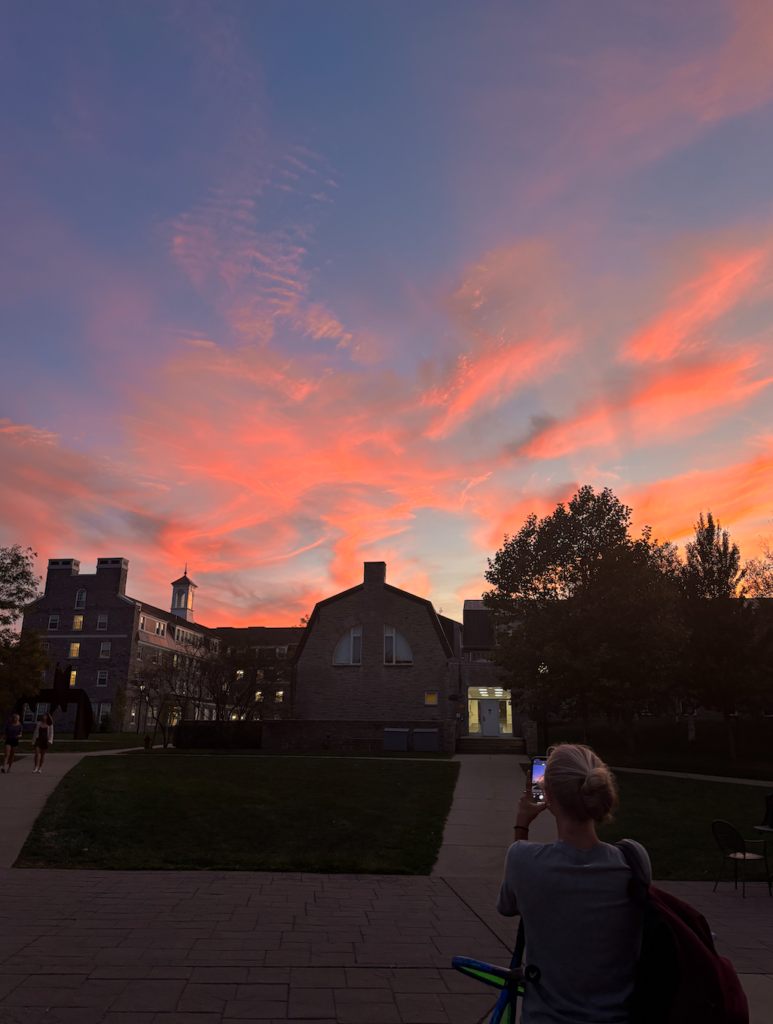
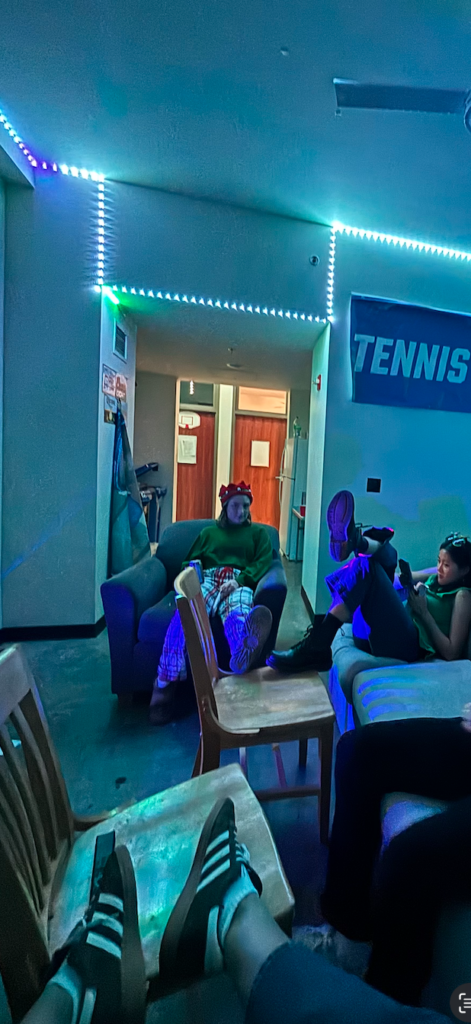
Below are images that reflect my observations and insights from this class. It shows how much society is glued to their phones. It is important to note that I had my phone out in all of these pictures to capture these moments. It was interesting to look back through my camera roll and see how common it is for people to be on their phones.