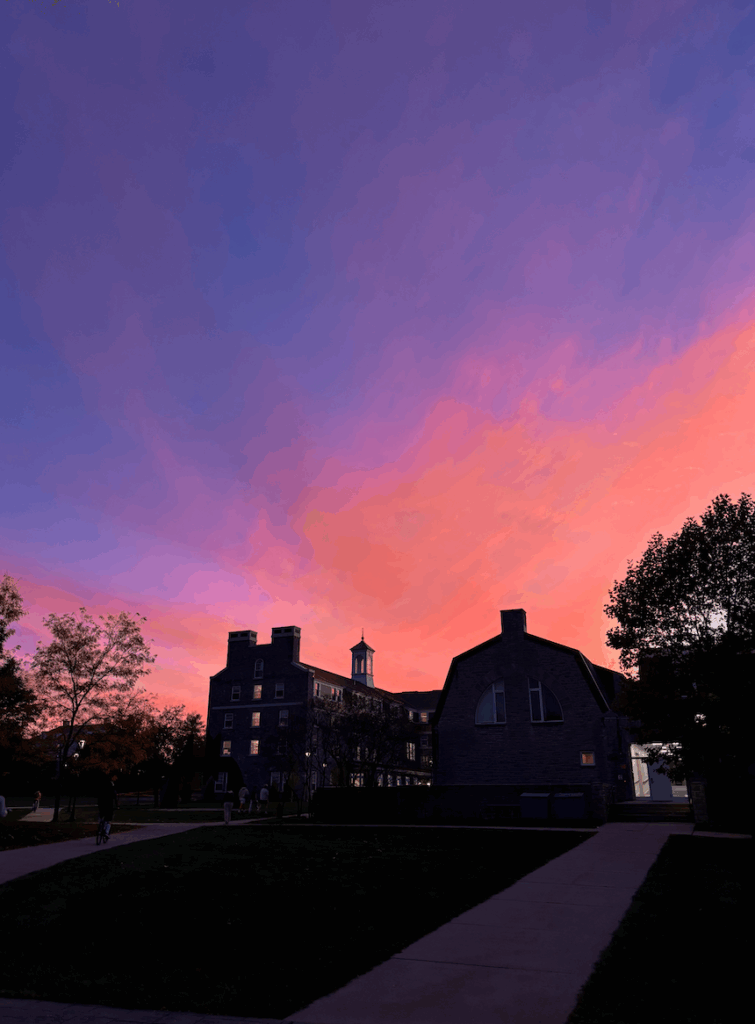
I was very pleasantly surprised by this 30×30 nature challenge. Going into the challenge, I was excited but also worried at the same time that it would feel like a burden that I had to do every day. Quite the opposite occurred. I looked forward to my 30 minutes in nature. And, even more to my surprise, I looked forward to following the rules that I set for myself during this challenge. Because of this, most of my days actually took longer than 30 minutes outside, unintentionally. My rules were as follows (and I barely strayed away from these rules): I was able to have my phone on me, such as in my pocket, but could not go on it and look at it during my 30 minutes. I had to go some days alone in nature for 30 minutes, but other days I could bring friends along. And, I had to explore a new spot at least once a week during the 30 days. My highlights of this challenge were going to Woodstock and walking around, hiking up Camel’s Hump, and being outside during the most beautiful sunsets. For Woodstock and Camel’s Hump, they were highlights because they were both new places in the Middlebury vicinity that I had never been to before. Exploring naturally stunning landscapes near where I go to school was something I wanted to accomplish while studying here – so the challenge was a perfect excuse! For the sunsets, I was happy that being outside for my 30 minutes enabled me to witness them. If I didn’t have this challenge, maybe I would’ve been inside and then I would have missed the sunsets. Overall, this challenge brought me out of my comfort zone as well as allowing me to see things that made that month at Middlebury feel more meaningful. It has made me feel even more connected to nature at the end of the challenge versus when I started the challenge. I notice my surroundings more and somehow realize even more how beautiful of a campus and a town Middlebury is. I feel more appreciative of going to a school like this after partaking in this challenge.
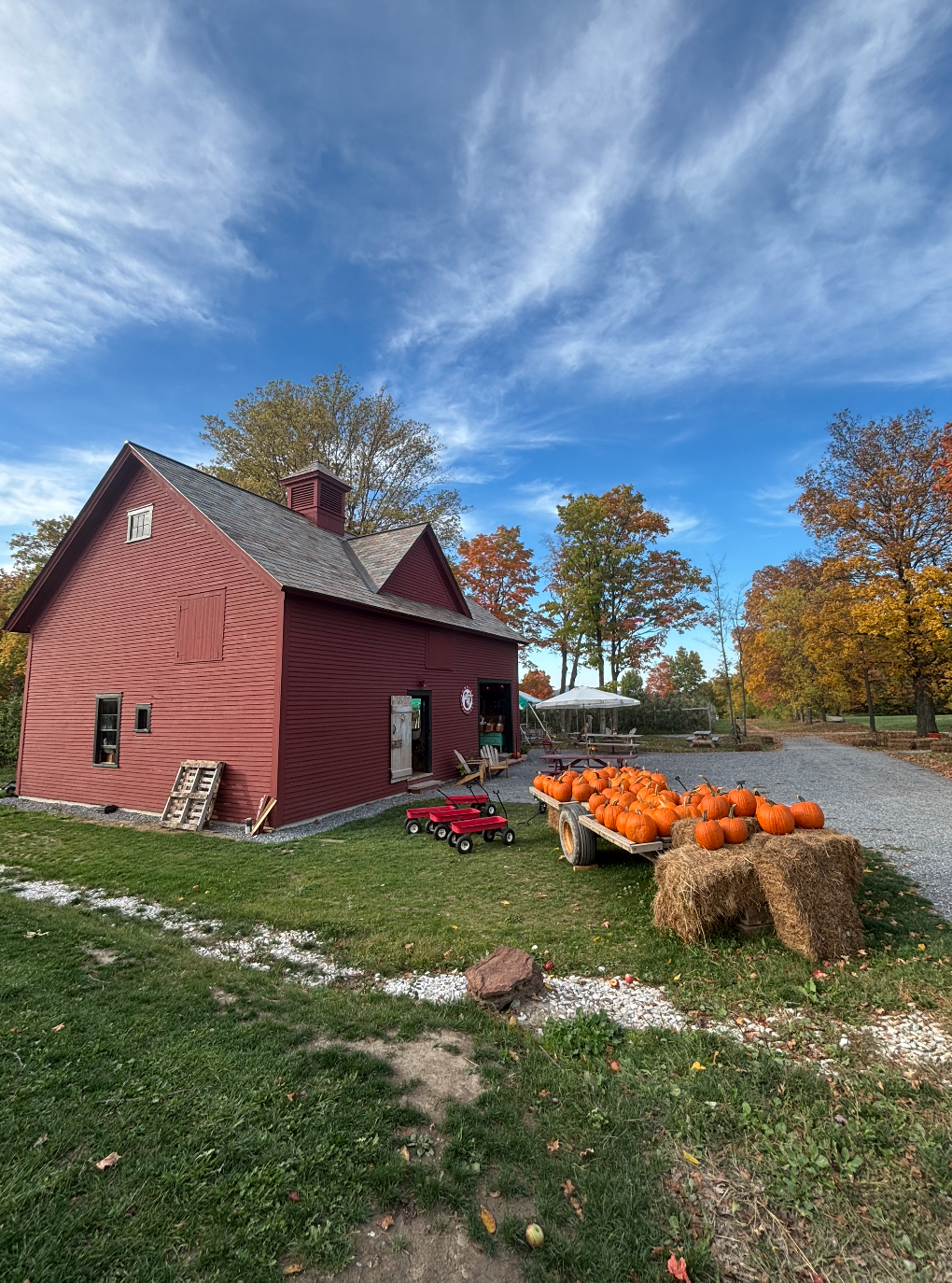
My time spent at Otter View Park clearly addressed Kaplan’s 4 stages: being away, extent, fascination, and compatibility. Otter View Park is where me and Liliana did our led discussion. I thought it would be the perfect place because of what I felt during and after spending some time there. It was a place I had never been before this year. I had never even heard of it even though it is a 2 minute drive from Atwater. When I heard about it from one of my friends, I knew I had to take a look because one of my goals was to explore a new place around Middlebury each week. When I went there, I was the only one there at the park and throughout the long board walk. Being away from Kaplan’s 4 stages really resonated with me. This park was almost part of campus, yet, I felt so away from the hustle and bustle of all the students on campus. It felt serene, and I felt physically removed from the world for a little while. I could get away from the pressures of everyday life. It enabled me to break from the cycle of directed attention fatigue (Kaplan, 1989). Being in this natural setting enabled me to create a distance from my work because I was away from campus. Next, I felt the extent as well. I felt very small in this park. I think because there was so much nature around me, I was being consumed by it. It felt like I was so small and nature felt so extensive. It wasn’t just Otter View Park that I was a part of for the time being, but I was a part of nature as a whole. Fascination was very evident while walking through the boardwalk at Otter View Park. I was in awe that a place like this was so close to campus. I was in awe of the sounds of the water at the creek. I was in awe of how the water combined with the grass and dew beside the boardwalk on either side. It gave my directed attention a time to rest because it recruited my involuntary attention (Kaplan, 1989). In addition, it prompted my soft fascination through these sounds of water (Kaplan, 1989). Lastly, compatibility was something I felt maybe to the largest degree. The nature around me at the park really supported my mental state in feeling restful and relaxed. It didn’t create friction or any demands, but quite the opposite. It enabled me to have full peace in my mind by not thinking of all that needs to get done. In this way, my experience at Otter View Park during the nature challenge perfectly illustrates how restorative environments function in practice, reinforcing the ideas we have been exploring and reading throughout the course.
One rule that truly helped me feel more connected to nature was not going on my phone at all during my 30 minutes outside. This really enabled me to appreciate the little things about Middlebury that I would not have been able to recognize if my eyes were glued to my phone. This rule clearly coincides with the idea of solitude deprivation that Cal Newport speaks about in his book Digital Minimalism. Our phones are wired to destroy solitude because they fill every boring or empty moment with some sort of stimulation (Newport, 2019). This can be scrolling, messages, notification, or media in the background, etc. Our phones have the ability to take away all of our attention and drag us into its world. They have the ability to have us purely focus on what is on our phone rather than the outside world. In the case of spending 30 minutes outside, because I was not on my phone, I could pay attention to other things besides my phone. My eyes and my mind were not distracted, and therefore, I could experience more solitude through nature (Newport, 2019). Newport writes about the importance of taking a 20–30 minute solo walk without your phone to build the habit of being alone with your own thoughts. During my own solo walks, this sense of solitude really came through. Even though I kept my phone in my pocket for emergencies and to access buildings, not using it still produced the same effect as leaving it behind entirely. Overall, my solitude was illuminated through these uninterrupted walks, which directly reflects the ideas Newport highlights in Digital Minimalism.
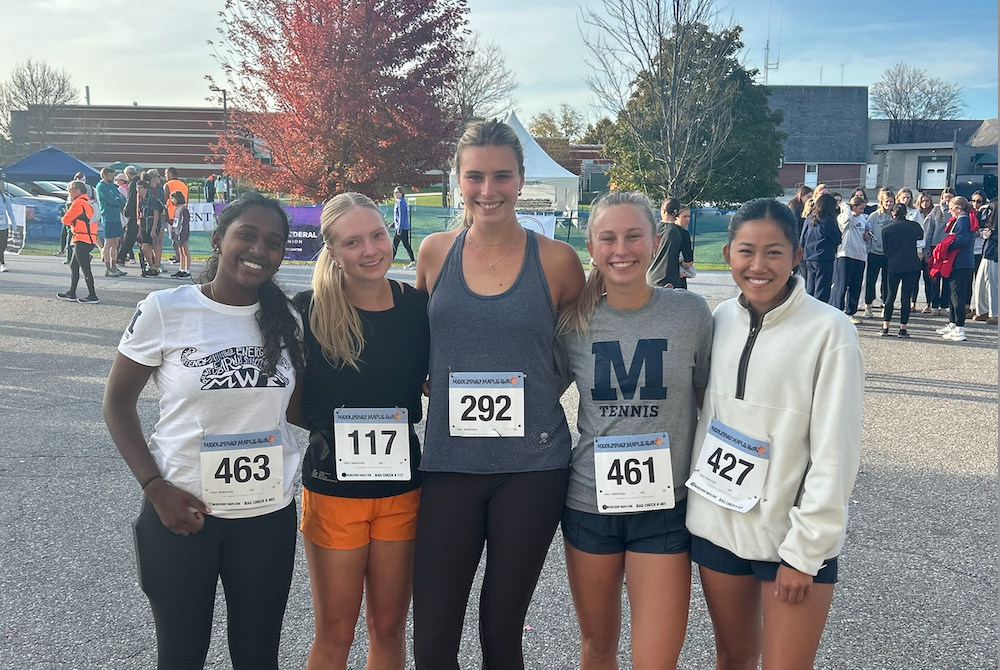
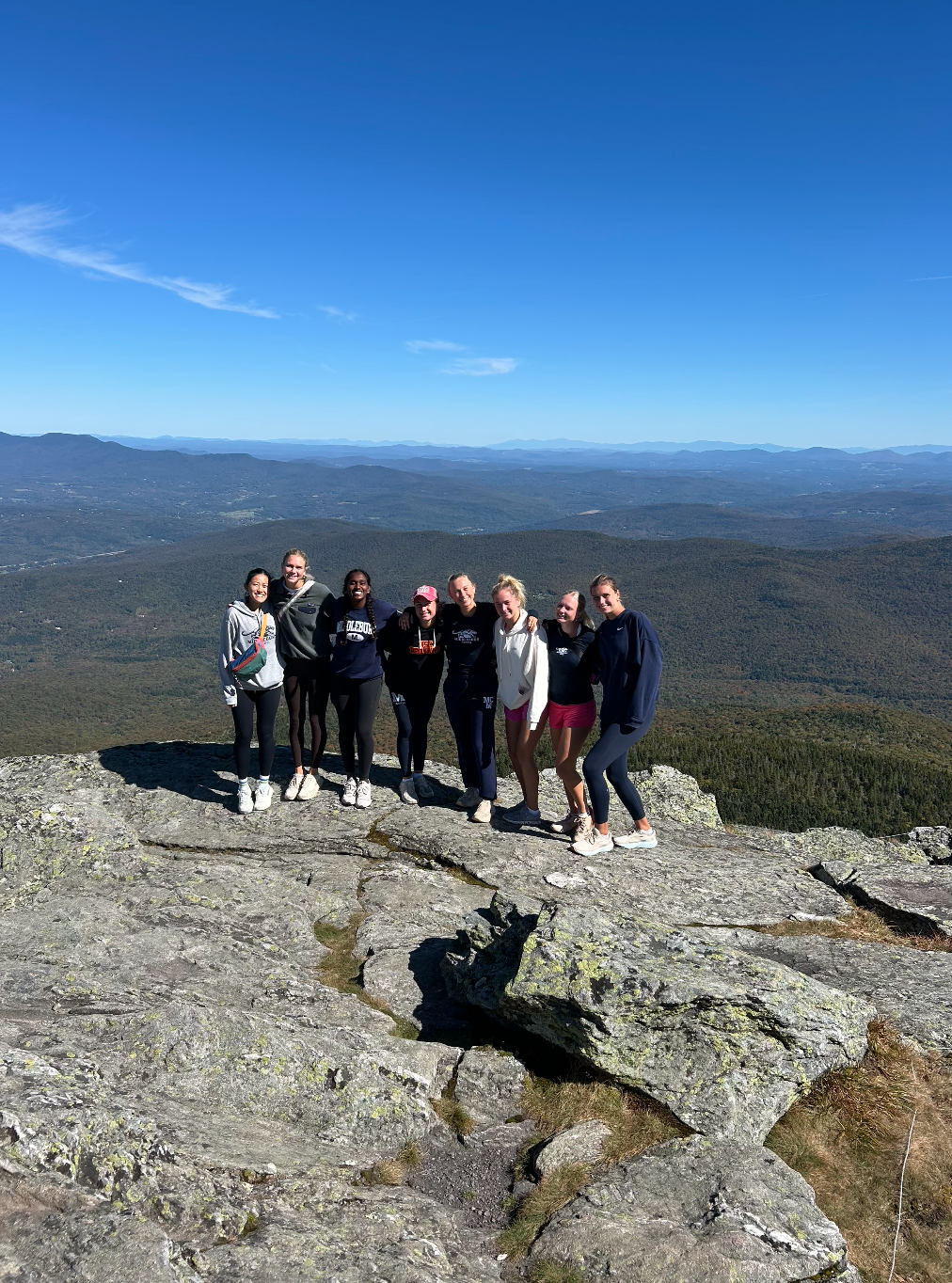
The idea of experiencing solitude while still being surrounded by people was harder for me to grasp during this challenge. Newport highlights that many people feel their deepest solitude in a busy coffee shop while sitting alone (Newport, 2019). I had a very different experience. For example, I would go on a solo walk around campus and then make my way to the dining hall. My solo walk gave me a strong sense of solitude because I was alone with my thoughts and not surrounded by people. However, the moment I stepped into the dining hall, my solitude vanished. I became easily distracted by the crowd around me and no longer felt mentally alone. I understand that solitude varies from person to person, but for me, true solitude only comes when there is more silence than bustle. I want to test this theory in a city setting. I wonder whether it feels harder to find solitude in the Middlebury dining hall because I am surrounded by people I know, whereas walking the busy streets of New York, where I likely wouldn’t know anyone, might allow me to feel more internally quiet despite the external noise. I also think it is easier for me to feel solitude outside in nature rather than inside in an enclosed space. For example, I can find more solitude walking through downtown Middlebury, even with people around, than I can in the dining hall. There is something about being outside, the air, the natural sounds, the openness that brings out the truest form of solitude for me and allows my thoughts to come about.
The insights I gained from this challenge most concretely showed me how important nature is in my life. I have grown up being surrounded by nature. I went to the beach every summer which holds a really important place in my life. I take walks with my parents around our neighborhood. We used to go into the woods and cut our Christmas tree down as a family – and had to spend hours outside in freezing weather. My brothers and I would spend hours outside running around and playing at the park by our house. I have played tennis outside for most of my life – and having all the elements of nature impact how I feel I play (wind, sun, temperature, etc.). As shown, growing up and being outside were very much intertwined. It is what I remember most from my childhood because they were the most transformative and essential moments. It was not the time spent indoors on my phone that I remember the most, but instead, those are the moments that I want to wean off and get away from. I have lost touch a little bit with spending time in nature and feeling free the older I get. This challenge enabled me to get back to my childhood roots and feel something while exploring nature. Middlebury is the perfect place for this to occur so I am so happy that this class and this challenge pushed me to be outside everyday. I have learned from this challenge that I don’t want this experience just to be in the challenge itself, but I want to push myself to do this 30 minutes everyday all the time, regardless of being in this class or not. I have felt so much clearer in my head after the 30 minutes outside. I want to continue this and get back to the way I felt in nature as a child. The feeling that everything else and all the worries go away for a little bit. Appreciating nature enables me to let go of these negative thoughts. Although they ultimately will come back, they are free for a bit while I am experiencing solitude in nature. I think turning this challenge into a habit that I do everyday is doable. I am excited to keep experiencing solitude, digital minimalism, and Kaplan’s 4 stages throughout my newfound and improved relationship with nature.
References
Newport, C. (2019). Digital minimalism: Choosing a focused life in a noisy world. Portfolio/Penguin.
Kaplan, R., & Kaplan, S. (1989). The experience of nature: A psychological perspective. Cambridge University Press.